Does Trauma Ever Go Away?
It happened years ago. You have built a life since then, and on paper it is all behind you. Most of the time you believe that. Then a tone of voice, a smell, a particular kind of silence, and your chest tightens as if no time has passed at all. Afterwards comes the question you might never say out loud. Does trauma ever go away, or is this just how I am now?
Here is the short answer, and it comes in two parts. Trauma does not simply fade with time, because it does not live in the calendar. It lives in your nervous system, as a set of protective lessons your body learned when something felt like too much. But it is not a life sentence either. What was learned can, slowly, be unlearned. For many people the grip loosens so far that the past becomes something that happened to them, rather than something that keeps happening.
In my counselling practice this is one of the questions I hear most often, usually asked quietly, as if the person is half afraid of the answer. It deserves a proper, honest reply. So let me give you one.

Why Trauma Does Not Go Away On Its Own
You will have heard that time heals. For a cut on your arm, it does. For trauma, time on its own is usually not enough, and it helps to understand why.
Trauma is not really a memory problem. It is what happened inside you when something was too much, too fast, or too alone, and it is stored as learning rather than as a story. Your body drew conclusions. Raised voices mean danger. Needing people is risky. Calm is just the bit before it goes wrong. Those conclusions do not expire, because their whole job is to keep protecting you, and your nervous system would rather sound the alarm a thousand times too often than once too late.
To be fair to time, some difficult experiences do settle on their own. If you were shocked or hurt, and you had safety and people around you afterwards, your system often finishes processing what happened and files it away. That is ordinary recovery, and it is what nervous systems are built to do. Trauma is what we call it when that processing could not finish, because the experience was too big, went on too long, or had to be survived alone. The file stays open.
So when people ask whether trauma goes away on its own if they simply ignore it, the answer is usually no. Ignoring it is not neutral. Avoidance quietly teaches your body that the feeling really was too dangerous to face, which confirms the alarm rather than retiring it. This is why you can be twenty years past something and still notice the signs of unresolved trauma in your sleep, your relationships, or the strength of your reactions.
Does Trauma Ever Go Away? The Honest Answer
Asked plainly, does trauma ever go away? Not in the way a cold goes away, where one morning it is simply gone and forgotten. Trauma changes you, and honest healing does not promise to un-change you. What it offers is different, and in my experience it is better than most people dare to expect.
It is worth pausing on what sits underneath the question, because I do not think most people are really asking about memory. They are asking, am I stuck like this? Will I always flinch at kindness, brace at the sound of a raised voice, lose whole days to something that ended years ago? That version of the question has a much more hopeful answer.
Think of the difference between a wound and a scar. A wound runs your day. You guard it, dress it, plan around it, and it hurts whenever anything brushes against it. A scar is different. It is still part of you. You can see it, and in cold weather it sometimes aches. But it no longer opens, and it no longer decides what you can do.

Healing looks like that. The memory stops arriving as a full-body event and becomes something you can recall without being taken over. The reactions still visit sometimes, but they come less often, they pass faster, and they stop making your decisions for you. People who once could not speak about what happened find that they can, and the telling feels like history rather than news.
Why the Past Still Feels So Present
To understand why trauma lingers, it helps to see the shape of the pattern. In my work I map this with the Survival Cycle, a six-stage framework that describes how the body responds to perceived threat, and why the response begins before you have had a single thought.
It starts with a trigger, something in the present that echoes a past threat. A tone of voice. A certain look. A message left unanswered. Your body responds before any thought arrives: chest tight, breath shallow, stomach knotted. A survival response fires, fight, flight, freeze or fawn, whichever once kept you safe. Only then does your mind join in, writing a story to explain what your body already feels. You are overreacting. You are weak. Something terrible is coming.
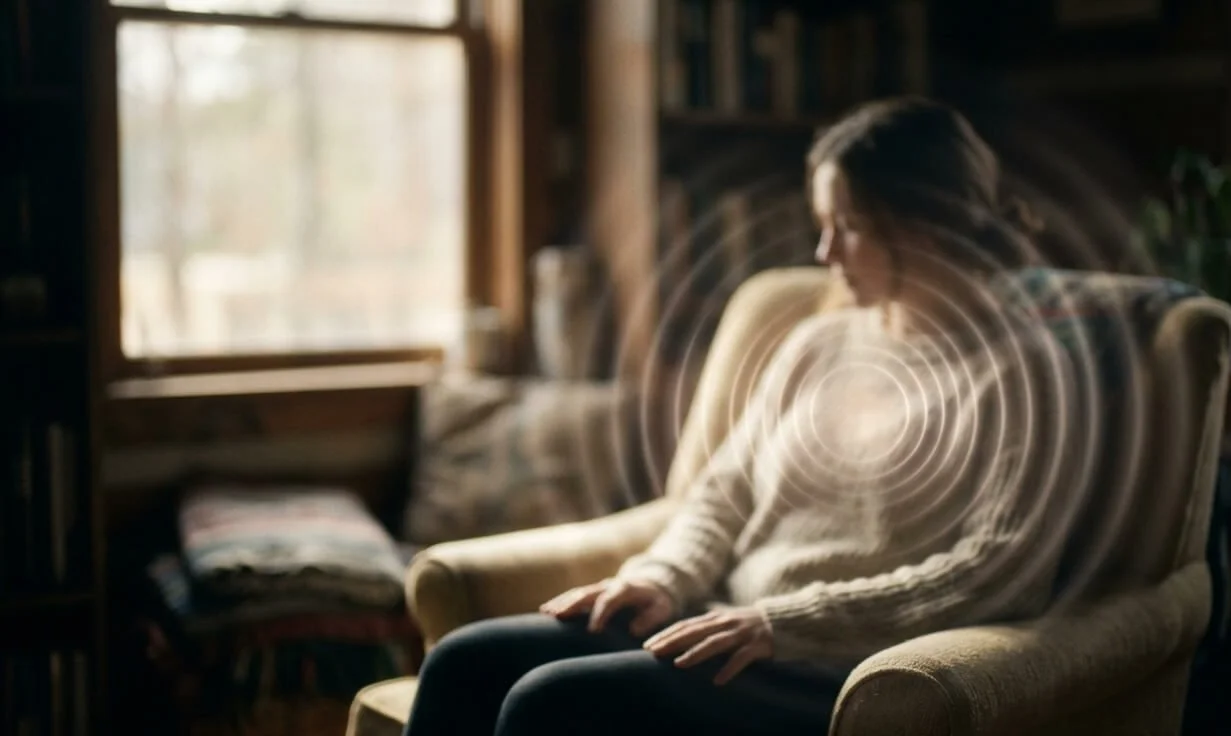
Notice the order. Body first, story second. That order is why willpower and logic feel so useless against trauma, and why the anxiety that trails an old wound rarely responds to being told to calm down. You cannot reason with a smoke alarm. You can, however, teach it that the fire is out. That teaching is what healing actually is.
Can You Ever Heal From Trauma?
Yes. You can heal from trauma, as long as we are honest about what healing means. It does not mean erasing the memory, and it does not mean becoming the person you would have been if nothing had happened. It means your nervous system learns, gradually and through real experience, that the danger is over.
That learning rarely comes from understanding alone. You can see your patterns with perfect clarity and still find your chest tightening on cue, because insight does not heal you. Feeling does, in doses small enough to be safe. Each time a feeling rises, is allowed to be there, and passes without catastrophe, your body files a new piece of evidence: that was survivable.
In my counselling practice I watch this happen in small, unglamorous steps. Someone notices they are tense and stays in the room instead of finding a reason to leave. Someone lets themselves cry in front of another person for the first time in years, and the sky does not fall. None of these moments looks like a breakthrough. Together, they are exactly how a nervous system rewrites its rules, which is the slow, real work of breaking the trauma cycle.
How Long Does It Take To Heal From Trauma?
If you are wondering how long it takes to heal from trauma, the truthful answer is that there is no fixed timeline, and you can be gently sceptical of anyone who offers you one. Anything that promises to clear trauma in thirty days is describing something other than trauma.
People often arrive at this question sideways, wondering why they are still affected so many years later when everyone around them seems to have moved on. If that is you, the timeline you have already lived is not evidence of failure. A pattern cannot begin to change until it is seen for what it is, and most people carry theirs for years before anyone helps them see it.
The pace depends on real things. How early the learning happened, because a lesson learned at seven has had decades of practice. Whether it was a single event or a long climate, since a childhood spent reading the room leaves more layers than one terrible afternoon. How safe your life is now, and how much support you have around you. None of this makes you slow or a lost cause. It is simply the size of the task your body is undertaking.
What I can tell you from the therapy room is that change tends to arrive earlier than people expect, and completion later. The first shifts, sleeping a little better, catching a reaction mid-flight, recovering in an hour instead of a week, often appear within months of feeling properly safe. The deeper rewiring keeps unfolding for as long as your body keeps receiving new evidence. Faster is not the goal. Safer is, and trauma therapy paced to what your nervous system can hold will always do more than any deadline.
Something You Can Begin Today
You do not need a therapy room to take the first step, and this piece would be unfair if it ended by simply pointing you at one. So here is something you can begin today.
The next time the old feeling rises, do not argue with it and do not obey it. Just watch the order. Notice that your body tightened first and the story arrived second. Then name the story for what it is: old news, not fact. This is the alarm, not the truth. You are not trying to switch the feeling off. You are letting your body discover, one occasion at a time, that the feeling can be there and nothing bad happens.

That is enough to begin. It is not a cure, and it is not meant to be. It is the start of a different relationship with your own alarm system, and talking therapy takes the same work further and deeper, with someone beside you who is not alarmed by what you are carrying. The past does not have to keep happening to you. What was learned can, slowly, be unlearned.
A Soft Next Step
I am not currently taking on new clients, but I am keeping a waitlist. If something here has landed, you can add your name and I will be in touch as soon as a space opens. No pressure and no commitment, just a way to stay connected for when the time feels right.
Frequently Asked Questions
-
Trauma does not usually vanish completely, but it can lose its grip so thoroughly that it stops shaping your daily life. The memory remains, the way a scar remains, while the flashbacks, the guardedness and the outsized reactions gradually settle. Most people discover that what they wanted was never a blank memory. It was peace with the one they have.
-
Childhood trauma can heal, though it often takes longer, because the learning happened while your nervous system was still forming and the patterns have had decades of practice. The effects can reach adult life in ways that are not obvious, from relationships to self-worth. With enough safety and support, even lessons learned very young can be unlearned.
-
Usually not. Ignoring trauma tends to confirm your nervous system's belief that the feeling is too dangerous to face, which keeps the alarm switched on. Trauma is learning, not weather, and learning changes through new experience rather than through waiting. Avoidance postpones the discomfort but extends its stay.
-
There is no fixed timeline for healing from trauma. The pace depends on how early it happened, whether it was one event or years of them, and how safe and supported your life is now. Early shifts often appear within months of consistent safety, while the deeper change unfolds over a longer arc. Anyone promising a set number of sessions is overpromising.
-
Some healing can happen outside the therapy room, because nervous systems learn safety through any steady, safe relationship and through repeated experience of feeling emotion and surviving it. Therapy is the deeper path rather than the only one. Trauma therapy offers a relationship built deliberately for that learning, paced to what your system can manage.
-
Often because your life has finally become safe enough to feel it. While you are busy surviving, your nervous system holds back what it cannot afford to process, and when the pressure eases, the held material begins to surface. Distressing as that is, it is frequently a sign of capacity rather than decline. If it ever feels like more than you can hold, reach out to your GP or someone you trust.
Related Articles